Back
Back
Afolabi Ezekiel - June 16, 2025
The FIFA Club World Cup has kicked off with energy, excitement, and a fair share of controversy. In just a few matchdays, the tournament has already provided dramatic scorelines.
We have also seen large and passionate crowds, moments of brilliance, and heated debates on competitiveness, weather conditions, and the weight of star power.
As football’s global showpiece for club champions begins to stretch its legs under a new expanded format, here’s a deep dive into what we’ve learned so far from the action.
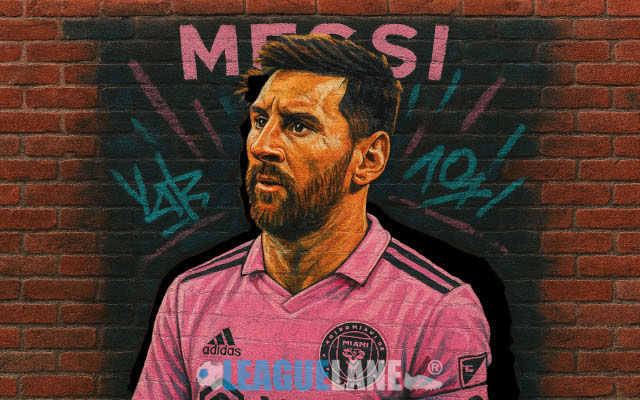
Regardless of the tournament’s structure or its novelty, one man continues to steal the spotlight — Lionel Messi. Fans flocked to the Hard Rock Stadium in droves, not just to watch Inter Miami play against Al Ahly, but primarily to witness the Argentine legend grace the pitch.
Donning pink kits with “Messi 10” emblazoned on the back, thousands turned the match into a Messi celebration rather than a tournament opener.
Even global icons like Luis Suarez and Sergio Busquets were left in the shadow of Messi’s magnetism.
The atmosphere around the opening fixture of the Club World Cup 2025 felt more like a headline concert in Las Vegas than the birth of a new football format.
While Messi’s presence is boosting early interest, the concern for organizers is what happens if Inter Miami fails to progress beyond the group stage.
Without their marquee attraction, can the tournament sustain attention?
One of the most glaring concerns of the new 32-team format was the likelihood of lopsided fixtures, and that concern was quickly validated. Bayern Munich’s demolition of Auckland City, with a 10-0 win, illustrated the vast gulf in quality between footballing elites and representatives from less prominent regions.
Auckland City, long dominant in Oceania, earned their spot the hard way. But against Europe’s elite, they looked completely outmatched.
While these results highlight disparity, they also bring an ironic twist, the financial rewards Auckland receive just by participating might create an imbalance in their domestic league, where they could become disproportionately dominant.
This raises questions about whether expanding the tournament without addressing football development in less advanced regions might ultimately do more harm than good, both at the international and domestic level.
Despite doubts about fan engagement in the U.S., especially for a newly reformatted competition, attendance has been encouraging. Stadiums have drawn passionate supporters, even if their reasons differ.
For many fan, the appeal lies in star power of Lionel Messi and the big-name European teams, and entertainment.
From pre-match performances to interactive fan activities, FIFA has turned the competition into a spectacle. But while this strategy boosts early enthusiasm, long-term credibility can only be earned through football itself.
The question now is whether the Club World Cup can shift from being a glamorous football festival to a serious competition that fans follow for the stakes, rivalries, and legacy.
A recurring challenge in North American football tournaments has resurfaced, extreme heat.
Matches scheduled to accommodate European prime-time audiences are being played in sweltering afternoon conditions. For players, it’s not just uncomfortable, it’s draining.
PSG players, after a dominant display against Atletico Madrid, admitted post-match that the temperature made things more difficult than they appeared. Coaches too voiced concerns about player welfare, especially with kickoffs in near 90°F (32°C) heat.
The 1994 World Cup in the U.S. faced similar issues, and it seems FIFA has yet to find a better solution.
While European TV ratings are important, there’s growing argument for either scheduling matches later or considering a winter tournament window.
Even with strong teams and global stars involved, the Club World Cup is wrestling with its identity.
Is it a mini–World Cup? A global Champions League? Or just a well-branded friendly tournament?
So far, the club world cup has been mostly seen as a platform for entertainment and experimentation.
The real test will come in the knockout rounds, where competitiveness should increase and narratives can take shape. Until then, it’s relying heavily on marquee players and moments of spectacle rather than the weight of the trophy or the history behind it.
To truly establish itself, the Club World Cup must offer compelling football, balanced fixtures, and a reason for fans to care beyond star appearances.
Legacy is not built in a few games, it’s earned over time, through drama, unpredictability, and prestige.
Upcoming games promise more intrigue, Chelsea are set to face Los Angeles FC, Boca Juniors clash with Bayern Munich, and Flamengo take on ES Tunis. These fixtures will not only test the strength of the format but may also deliver the kind of even high-stakes football fans crave.
While Real Madrid, who had a torrid season, will be in action against the oil rich Al Hilal on Wednesday. Along with Man City, the Los Blancos and PSG are tipped to be the red-hot favourites to win the club World Cup 2025.
The expanded Club World Cup is still a work in progress, full of ambition, flaws, and potential. It has the building blocks of something meaningful, but only time will reveal whether it can stand alongside football’s most beloved tournaments or remain a curious sideshow in the global calendar.
For now, we continue to watch, question, and hope. Because even in its imperfections, the Club World Cup is sparking conversations and that is a victory for the game.