Back
Back
Afolabi Ezekiel - June 4, 2025
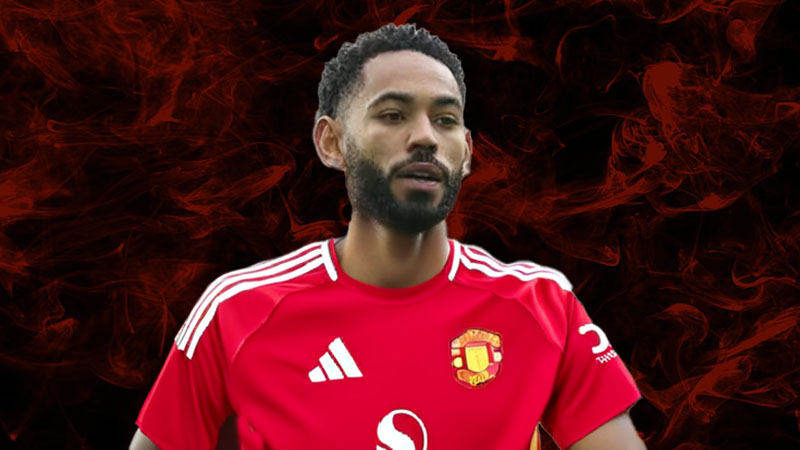
Matheus Cunha’s transfer to Manchester United for £62.5 million is a bold move that could reshape their attack under Ruben Amorim. Here’s a breakdown of what the 26-year-old Brazilian brings to Old Trafford:
Manchester United’s 2024/25 season was one to forget. A 15th-place finish in the Premier League, which is the club’s worst finish in the modern era coupled with a crushing Europa League final defeat to Tottenham, confirmed what many feared. With no European football on offer and a manager under pressure, the situation could have quickly fallen into chaos.
But amid the gloom, the signing of Matheus Cunha from Wolverhampton Wanderers offers a glimmer of light. By activating the £62.5 million release clause in Cunha’s contract, United have moved swiftly to add quality, versatility, and flair to an attack that often lacked all three last seasons.
The 26-year-old Brazilian is not just a flashy signing; he’s a timely injection of everything Manchester United was missing. With goals, guile, and grit, Cunha brings a unique blend that could become central to Ruben Amorim’s rebuild. But what exactly does he bring to Old Trafford? Let’s unpack it.
Cunha’s arrival comes at a time when United are tactically shifting under Amorim. The Portuguese manager favors a 3-4-2-1 formation that relies heavily on fluid movement in the attacking third, quick transitions, and adaptable forwards who can interchange roles without disrupting structure.
Cunha is tailor-made for such demands. At Wolves, he operated across multiple positions, as a second striker, a left-sided attacking midfielder, and even as a lone center-forward when needed. His tactical intelligence allows him to find pockets of space, stretch defenses, and link play with intelligent off-the-ball movement.
He’s not shackled by positional rigidity. In fact, his ability to roam, to drop deep, drift wide, or dart in behind could be the key to unlocking opposition defenses, especially when facing low blocks, which have historically troubled United.
Cunha’s tally of 15 goals and 6 assists in the English Premier League last season only tells part of the story. His goal contributions accounted for more than a third of Wolves’ total, underscoring his importance. But it’s the manner in which he influences games that really sets him apart.
Whether it’s a solo run from midfield, a clever give-and-go at the edge of the box, or an instinctive finish from a rebound, Cunha’s unpredictability gives him the edge. He’s a high-tempo player who thrives in chaos, the kind of attacker who can turn a broken play into a goal-scoring opportunity in seconds.
Take his performance against Leicester, for example. He dropped deep to collect the ball, skipped past two midfielders with ease, and carried it 30 yards to create a shooting chance. Even when the final shot missed the target, it was a clear example of his proactive mindset and ability to breathe life into stagnant moments.
Bruno Fernandes has been United’s creative metronome for several seasons, often carrying the burden of attacking output singlehandedly. The Portuguese playmaker is everywhere, creating chances, pressing, shouting instructions, and often digging United out of difficult situations.
But this workload has come at a cost. When Fernandes is unavailable or ineffective, United struggle. That’s where Cunha comes in. He doesn’t just bring his own creativity, he offers support, relief, and potentially even succession.
Both players rank among the highest in the Premier League for usage rate, which is a measure of how often players are involved in their team’s attacking sequences. While that might suggest a risk of overlapping responsibilities, it also means United will finally have two genuine attacking engines capable of shouldering creative duties.
It will, however, require balance. Amorim will need to ensure that the two can coexist without stifling each other. If he can strike that equilibrium, United could have one of the most dangerous creative pairings in the league.
Cunha’s strength lies not just in movement or dribbling, but in his unwavering self-belief. When he sees an opportunity, he takes it whether it’s a long-range strike, a darting run, or a daring flick.
At Wolves, he consistently demonstrated his ability to take responsibility in the final third. He was involved in nearly 30% of his team’s shots, often initiating and completing attacking moves himself.
He’s not afraid to shoot from distance, and while his weaker foot isn’t yet elite, he has scored with it including a sharp near-post finish against Ipswich and a curling effort at Anfield.
He’s also a reliable ball-carrier. In a United team that often looks static, his ability to carry the ball forward at pace could be transformational. He thrives in transition, but crucially, he also contributes in possession, breaking lines with clever passes and dragging defenders out of position to open up space for teammates.
One often overlooked advantage of Cunha’s signing is that he has already played in systems similar to Amorim’s. Under Vitor Pereira and Gary O’Neil at Wolves, he was granted freedom to roam and take charge of offensive situations.
Matheus Cunha understands the demands of a system that values tactical fluidity, positional rotation, and sharp pressing.
Yet, for all his experience, Cunha is still developing. At 26, he’s entering his prime, a phase where consistency, decision-making, and leadership can all take a step forward. The platform at United, despite its current flaws, offers him the spotlight and the support to elevate his game further.
While Cunha’s technical profile is impressive, his temperament has raised eyebrows. A red card against Bournemouth in the FA Cup and a heated exchange with staff after the Ipswich game suggest there’s a fiery edge to his personality.
That edge can be both a weapon and a liability. United have seen passionate players thrive (Bruno or Casemiro), but in a fractured dressing room, discipline and unity must take precedence. Amorim and his leadership group will have to manage Cunha closely, ensuring his competitive nature doesn’t boil over.
Still, his passion could also be what United need, someone who doesn’t hide when things get tough. In a squad that often wilted under pressure last season, Cunha’s self-assurance could prove invaluable.
In many ways, Matheus Cunha is the ideal signing for Manchester United right now. He’s versatile, high-performing, confident, and tactically suited to Amorim’s vision. More importantly, he represents a shift, a signal that United are still capable of attracting Premier League-proven quality despite their absence from European competition.
Cunha isn’t the final piece of the puzzle, but he could be the catalyst United have lacked, a player with enough bravery to take risks, enough skill to execute them, and enough belief to lead by example.
With the right guidance, the right support, and a bit of patience, Matheus Cunha could be more than just another signing. He could be the heartbeat of the new Manchester United era.