Back
Back
Afolabi Ezekiel - June 10, 2025
From council estates in Manchester to the top of the Bundesliga and now Liverpool Football Club, Frimpong’s rise has been meteoric. But his story is not just about success, it’s about innovation.
In modern football, the role of the full-back has evolved beyond recognition.
Once tasked with little more than marking wingers and supporting attacks sporadically, today’s full backs are creators, runners, playmakers, and even goal scorers.
Among the new generation redefining the position, few are as electrifying or as influential as Jeremie Frimpong.
Born in Amsterdam to Ghanaian parents, Jeremie Agyekum Frimpong moved to Manchester at six after his parents separated.
His mother, Bernice, juggled raising seven children in a tight-knit family setup. For Jeremie, football wasn’t a privilege, it was survival. “We had nothing,” Frimpong said in one of his numerous interviews prior to his switch to Liverpool “But we had each other and we had the ball.”
Playing for local teams with borrowed gear, the young Frimpong’s raw pace and flair caught the eye. Manchester City offered him a lifeline at nine years old, enrolling him in their elite youth academy. From then on, football wasn’t just a way out, it was a mission.
At City, Frimpong’s natural attributes, blistering speed, agility, and relentless energy were refined into something special.
Under Pep Guardiola’s philosophy, even the academy full backs were expected to build attacks and control space like midfielders.
Though he never made a senior appearance for the club, Frimpong’s technical education and tactical awareness matured rapidly. Many thought he was too small to make it. He just trained harder.
In 2019, Jeremie made a bold move north, signing for Celtic at 18. In Glasgow, he did more than just break into the first team, he set the league alight. Fans quickly fell in love with his marauding run down the right, his infectious smile, and his tireless commitment.
In his debut season, he won the domestic treble and was named Celtic’s Young Player of the Year. More importantly, he demonstrated that a full back could be an attacking weapon, not just a support act.
It was at Bayer Leverkusen, however, that Frimpong evolved from promising talent to elite operator. Signed in January 2021, he arrived as a full-back and left as one of the Bundesliga’s most devastating wide threats.
In the 2023/24 season alone, Frimpong registered 14 goals and 12 assists in all competitions, outrageous numbers for someone nominally a defender.
Frimpong’s role under Xabi Alonso often saw him play as a right wing-back in a 3-4-3 system, pushing so high he was practically a second winger or inverted forward.
No longer just a runner, Frimpong became a thinker, understanding timing, angles, and how to pull defenses apart with or without the ball.
How Jeremie Frimpong Adapted His Game Beyond Traditional Full-Back Play
Frimpong’s style represents a shift in full-back philosophy. He doesn’t just overlap. he underlaps, dribbles into the half-space, and makes goal-scoring runs more akin to forwards. His ability to transition rapidly from defense to attack is unparalleled, turning counterattacks into scoring chances in seconds.
He also forces opponents to adapt. Teams can’t press high comfortably with Frimpong lurking, waiting to exploit any space behind. Managers have to account for him specifically, which is rare for a full-back.
In a world obsessed with inverted full-backs and hybrid midfielders, Frimpong shows there’s another path, the explosive wing-back as a game-changer.
In a tactical era dominated by structure, Jeremie Frimpong represents the beauty of unpredictability. He is a footballer who refuses to be boxed in by positional tradition. A defender by name, a forward by function, and a disruptor by nature.
Young players now look to him as a prototype, proof that you don’t need to be 6-foot-tall or born in La Masia to become world-class. You just need belief, acceleration, and courage to break the mold.
Beyond tactics, what sets Frimpong apart is his mentality. His strong Christian faith keeps him grounded, and his upbringing taught him resilience.
Whether being doubted for his size or questioned for moving from Man City to Celtic, Frimpong always chose the road less traveled, and always made it work.
“I play with joy,” he often says. That joy is evident. But beneath it is an unshakeable desire to prove people wrong.
International Recognition: A Rising Force for the Netherlands
Despite representing the Netherlands at youth levels, Frimpong’s first senior call-up didn’t come until 2023.
The competition at right-back was stiff, Denzel Dumfries, Hans Hateboer, and others stood in the way. But Frimpong’s unique attributes eventually made him impossible to ignore.
Though he didn’t feature in the 2022 World Cup, his performances in the Nations League and Euro 2024 qualifiers have raised his profile. For the Dutch, he offers a new dimension, one that could be vital in tournament football.
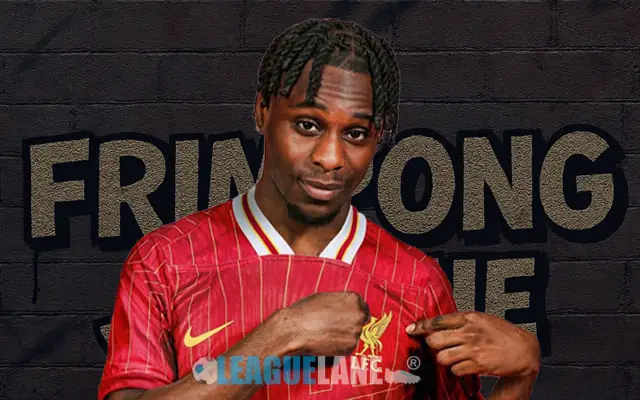
Liverpool’s €35 million signing of Frimpong is more than just a squad boost. It’s a tactical statement. With Trent Alexander-Arnold’s inevitable exit, Frimpong’s arrival signals a shift towards a system that values high, wide wingbacks who can contribute goals.
Arne Slot knows him well from the Eredivisie circuit and Dutch national scene. It’s likely Frimpong will be given freedom to roam, with a license to attack aggressively in transition-heavy football.
In short, expect chaos, speed and plenty of goal mouth action.
Jeremie Frimpong isn’t just another name on a team sheet. He is a tactical evolution in motion, a success story born from struggle, and a footballer who plays like he’s still chasing a dream on a concrete pitch in Manchester.
With his move to Liverpool, Frimpong isn’t just returning home, he’s bringing with him a whole new definition of what it means to play at right-back in the modern game.