Back
Back
Afolabi Ezekiel - June 5, 2025
Inter Milan faces a turning point after their brutal Champions League final loss to PSG. With no manager and an aging squad, how will they rebuild? Tactical breakdown & future analysis inside.
The final whistle in Munich didn’t just conclude Inter’s 2024–25 campaign, it brought a defining chapter in their modern history to a close. A 5-0 defeat to Paris Saint-Germain in the Champions League final was brutal in scoreline and symbolism, exposing both the exhaustion and limitations of a team that had given everything yet ended with nothing.
Now, with Simone Inzaghi officially stepping down following a mutual agreement with the club’s board, and a lucrative offer from Saudi Arabia’s Al Hilal on the table, the focus must shift from reflection to recalibration. Inter doesn’t need a minor tune-up, it needs a full structural rethink. Here’s why
In all honesty, Simone Inzaghi’s tenure at Inter should be remembered fondly. Six domestic trophies in four years, two Champions League finals, and the reclamation of Serie A glory with a second star added to the badge in 2024.
However, Inzaghi’s tactical ideology, a measured 3-5-2 system grounded in control, transitions, and positional discipline showed signs of both strength and staleness. At its best, it suffocated possession-heavy teams and hurt opponents in behind. But in moments of high pressure and against athletic, press-resistant squads, the system’s predictability became a liability.
Against PSG, it was exposed ruthlessly. Inter couldn’t press high, their aging midfield couldn’t sustain it. They couldn’t sit deep, PSG had too much technical quality. And they couldn’t dominate the ball, because their usual passing triangles in the middle were broken down by youthful energy.
It all broke down after the Champions League final defeat to Paris Saint-Germain. Let us talk about how that happened
Hakan Calhanoglu, Nicolo Barella, and Henrikh Mkhitaryan have been Inter’s midfield engine, particularly effective in Serie A where space is more compact and tempo slightly lower. But against PSG’s ultra-dynamic midfield that includes Vitinha, Fabian Ruiz and Joao Neves, with the roaming of Ousmane Dembele and the verticality of Desire Doue, Inter were constantly outnumbered in midfield transitions.
Calhanoglu was isolated as the regista. Mkhitaryan’s lack of mobility showed. While Barella who is usually Inter’s fire-starter was overwhelmed by how fast the ball moved around him. Inter needed legs, but had minds. PSG had both.
Denzel Dumfries and Federico Dimarco have been pillars of Inzaghi’s system but neither had a foothold in Munich. Hakimi dominated Dumfries on both ends, while Dimarco was hooked early after being repeatedly exposed by Desire Doue and Bradley Barcola.
Inzaghi’s 3-5-2 relies heavily on the wing-backs to offer width and progression. When they’re neutralized or exposed, the system becomes sterile. Inter couldn’t push high and pin PSG back because their wide players lacked positional support and physical superiority.
Benjamin Pavard and Allesandro Bastoni were valiant all season, but against pace, youth, and rapid vertical transitions, their legs betrayed them. PSG exploited this with quick rotations, particularly through Desire Doue and Khvicha Kvaratskhelia who dragged defenders out and isolated Francesco Acerbi.
Inter’s back three sat deep, but lacked the aggression and mobility to intercept in time. The result? Static defending and constant reactive positioning, a disaster against high-octane teams.
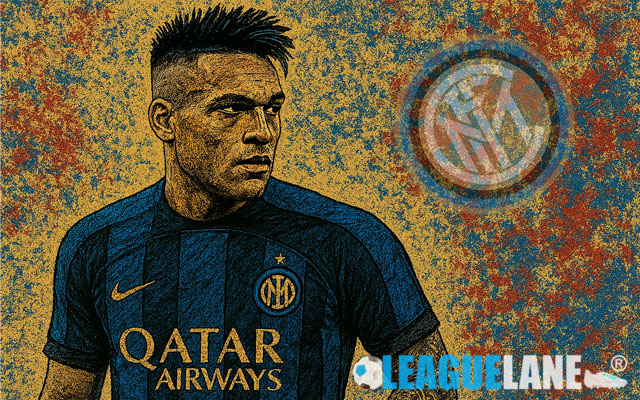
Despite scoring over 110 goals this season, Inter had just two shots on target in the final, both from range, both harmless. Lautaro Martinez cut a frustrated figure, starved of service. Marcus Thuram, usually adept at holding up play and dragging defenders wide, barely saw the ball.
Inter lacked an alternative plan. When their build-up patterns were denied, they had no chaos agent, no improviser, no direct runners like PSG. They didn’t have the legs or the tactical freedom to disrupt PSG’s shape.
This final wasn’t just about tactics. It was also about time and how little of it Inter’s squad has left at the top level. Yann Sommer (36), Henrikh Mkhitaryan (36), Francesco Acerbi (37), Matteo Darmian (35), and Marko Arnautovic (36) are all nearing the end. Even Lautaro Martinez and Hakan Calhanoglu are entering their late primes, and both are now being linked with possible summer exits amid uncertainty over Inter’s direction.
Without rejuvenation, Inter risk a sharp decline. But rejuvenation isn’t easy when the squad has been optimized around very specific tactical instructions. If a new coach brings a new identity, let’s say a 4-2-3-1 or 4-3-3 many current assets may not fit.
If Inter wants evolution, not just continuity, they may look to younger coaches like Raffaele Palladino (Fiorentina), Thiago Motta or even try to tempt a progressive name from abroad. A wildcard could be Roberto De Zerbi who signed for Marseille last summer. His positional play, risk-taking, and development ethos could spark a genuine shift.
The likes of Valentin Carboni and Davide Frattesi must form the spine of the next Inter if the club trusts them. Carboni offers creativity between the lines. Frattesi has box-to-box dynamism that could solve the midfield’s energy problem. The likes of Yann Aurel Bisseck and Tajon Buchanan need serious minutes, not cameos. The Club World Cup offers a great trial period, not just for youth, but for tactical change.
Inter must modernize tactically. Whether it’s maintaining a back three or transitioning to a four-man defence, fluidity and pressing must return to the team’s identity. The next coach must improve first-phase build-up under pressure, integrate a mobile No. 10 or wide playmaker, press higher and more consistently with a compact block, and develop a second formation for games where 3-5-2 falters.
Inter’s next assignment is the Club World Cup with Monterrey, Urawa Red Diamonds, and River Plate awaiting in the group. While it won’t erase the Munich trauma, it can be the stage for a new beginning. Fielding a retooled lineup and a new philosophy there, even if imperfect, would send a clear message that Inter aren’t just licking their wounds. They’re preparing for the next phase.
The question isn’t just “What next for Inter?” It’s “Who do Inter want to become?”
This isn’t the end of a good team, it’s the moment where a great club decides if it wants to build another golden generation or merely live in the shadow of recent silver medals.
The core is fading. The path ahead is steep, but also full of possibility.
It’s up to Inter to choose if this was the last final of a cycle or the first failure that fuels the next one.