Back
Back
Afolabi Ezekiel - September 12, 2025
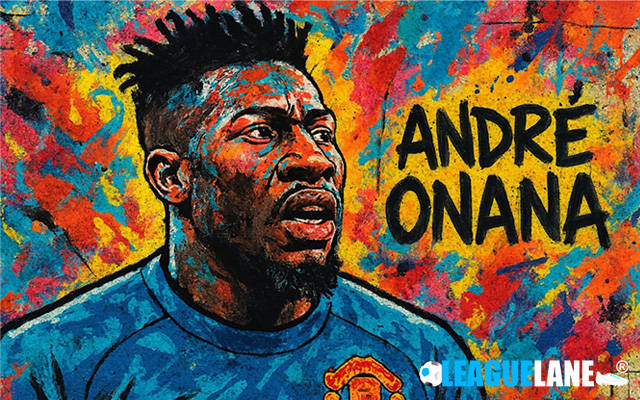
Signed for €51 million in 2023, Andre Onana was expected to revolutionize Manchester United’s play with his passing and composure. Two years later, he finds himself on loan at Trabzonspor—a symbol of another failed Old Trafford experiment.
Onana was expected to change the way the club played football since he was not signed up to only make saves. He was brought on as the player on the pitch who can weave magic through his brilliant passing, confidently build play from the back, and launch the counter-attacks.
Fast forward to two years, Onana has left on a loan to Trabzonspor, Turkey. Unfortunately, the club had anticipated that the purchase was for a new chapter, but it seems to be nothing but disappointment. It is only fair to wonder, what is the reason for such an outcome?
Onana has always excelled in what he does best. At Ajax, as he was in an Erik Ten Hag system, everyone else understood their role and how to help. The defenders were always comfortable on the ball, the midfield always had support, and the team always seemed to be in unison. Onana was able to take chances without getting punished.
It was the same at Inter Milan. Simone Inzaghi had Onana weaponized with the range of his passes with a disciplined back three. Onana was able to go from defense to attack in an instant and everything was in synchronization. The ninety minutes were balanced.
Now, Manchester United has been the exact opposite. Onana has had a backline which was injured and unorganized, a midfield which has been unresponsive and easily controlled, and inconsistent forwards all at the same time. With all of these attributes, there has been no structure, and he has been punished for it.
Onana as a goalkeeper is someone who works on faith. When he’s on a positive he is very hard to shake. His run with Ajax through to the 2019 Champions League semi-final and Inter in the 2023 final showed that. Performances after performances slotted like pieces of a puzzle and he soon became immovable.
But like his strengths, his weaknesses are very evident, and his game suffers. At the United, the tone was set by a timid beginning. A poorly executed tackle in the first game against Wolves saw him with a cameo.
Then came the blunder in the Champions League against Bayern Munich where a simple shot by Leroy Sané was left to roll into the net by him. That game in particular drove him to the need to apologize to the public. Attributing the blame to himself showed how deeply burdened he was.
The lowest point came away to Galatasaray, when poor clearances and soft goals left him looking overwhelmed. Instead of being the man to steady the ship, he was swept away by the chaos around him.
To be honest, Onana did bounce back after the errors against Galatasaray in Turke. In 2024, he demonstrated all the skills of the keeper United were eager to sign, his performances in the latter part of the year were encouraging. His saves were assured, his positioning was sharper, his passing was cleaner.
Unfortunately, it never appeared to last, his signature issues returned, in the form of poor judgment, and irrational decision making. The fans started losing faith. It appeared as if, every shot taken at the goal was a disaster in waiting.
The pressure only amplified when disagreements that were supposed to be private started making it to the tabloids, like the argument he had with Nemanja Matic. Suddenly, he was at war, not only on the pitch, but also off it. For someone battling with his confidence, the external noise was bound to make things worse.
One thing that always stood out about Onana was his wide-legged stance. At Ajax, it was praised as a clever technique that helped him get down to low shots quickly. But the style demands precision and sharp timing. If your confidence or fitness dips, the stance becomes a liability immediately.
That’s exactly what happened at United. The explosive push that used to carry him to the ball became sluggish. Shots that once looked routine started slipping through. His mistake against Grimsby in the League Cup, letting in a soft goal at his near post , summed it up. On its own, it was a minor error. In the bigger picture, it symbolized how far his game had fallen.
Onana is not a bad goalkeeper, in fact, it is quite the opposite. But he is the type of keeper who thrives in order, not in chaos. He requires a defense that is clearly defined, and a protective midfield. That was never the case in Onana’s time at Manchester United.
United didn’t just require a modern keeper but a focal point, someone who provided a sense of calm and reassurance at the heart of a storm. Onana, in contrast, mirrored the chaos surrounding him. And in a club that is already known for instability, that was doomed right from the start.
Onana’s saga at Old Trafford focuses not more on his skill but the moving parts that determine timing. In a different Manchester United side, more organized in their defending and more streamlined in their pressing, he could have been a seamless integration. But in this version, a club that can’t find identity and balance, he was always fighting a losing battle.
Onana’s stay with United will always be defined by the discrepancies between what was pledged and the reality that ensued. In the case of United, this once more drives home the desperate need to have a vision in place before strong and statement signings can be properly utilized.
In conclusion, Onana’s struggles at United highlight a truth about elite footballers: they are not plug-and-play. Success depends on the right ecosystem, and without structure, even the right player becomes the wrong signing.